
A Fluidstack alternative for flexible GPU infrastructure
Compare Fluence and Fluidstack across GPU access, provider choice, orchestration, pricing, and infrastructure requirements for training and inference.
A Fluidstack alternative for flexible GPU infrastructure
Compare Fluence and Fluidstack across GPU access, provider choice, orchestration, pricing, and infrastructure requirements for training and inference.

Fluence vs Fluidstack at a glance
Category
Fluence
Fluidstack
Best for
Self-managed AI workloads and flexible infrastructure
Large dedicated training and inference clusters
Core experience
Direct infrastructure control across providers
Single-tenant AI infrastructure with managed operations
Deployment options
GPU containers, VMs, bare metal
Machine instances, managed Kubernetes, managed Slurm
Provider flexibility
Capacity across multiple providers
Infrastructure delivered and operated by Fluidstack
Platform tooling
Console, API, preset or custom images
CLI, APIs, SSO, Lighthouse observability
Cost model
Transparent hourly pricing with zero egress fees
Order-based pricing by minute, hour, or subscription
Fluence vs Fluidstack at a glance
Fluence
Fluidstack
Best for
Self-managed AI workloads and flexible infrastructure
Large dedicated training and inference clusters
Core experience
Direct infrastructure control across providers
Single-tenant AI infrastructure with managed operations
Deployment options
GPU containers, VMs, bare metal
Machine instances, managed Kubernetes, managed Slurm
Provider flexibility
Capacity across multiple providers
Infrastructure delivered and operated by Fluidstack
Platform tooling
Console, API, preset or custom images
CLI, APIs, SSO, Lighthouse observability
Cost model
Transparent hourly pricing with zero egress fees
Order-based pricing by minute, hour, or subscription
Compare the full cost of GPU compute
Fluidstack prices infrastructure through customer orders, with billing set per minute, per hour, or by subscription. Fluence shows hourly rates across providers and deployment types. Compare GPU configuration, contract term, orchestration, storage, and support before choosing an option. Need another GPU model or setup? Send us your requirements and we will get back to you.

Compare the full cost of GPU compute
Fluidstack prices infrastructure through customer orders, with billing set per minute, per hour, or by subscription. Fluence shows hourly rates across providers and deployment types. Compare GPU configuration, contract term, orchestration, storage, and support before choosing an option. Need another GPU model or setup? Send us your requirements and we will get back to you.
Run GPU workloads with the control you need


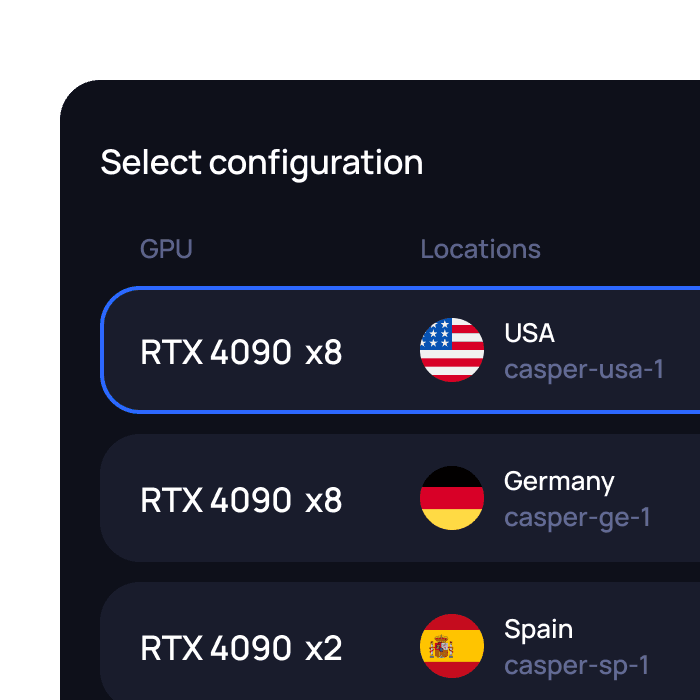
Run GPU workloads with the control you need
More control over how workloads run
More control over how workloads run
Built for self-managed GPU workloads
Fluence supports:
Built for self-managed GPU workloads
Fluence supports:
Try Fluence with one GPU workload
Move one representative workload and compare cost, setup, performance, and infrastructure control before expanding the deployment.

1
Choose a workload
2
Match its GPU and memory requirements
3
Select container, VM, or bare metal
4
Run under representative conditions
5
Compare cost, performance, and control
Try Fluence with one GPU workload
Move one representative workload and compare cost, setup, performance, and infrastructure control before expanding the deployment.
1
Choose a workload
2
Match its GPU and memory requirements
3
Select container, VM, or bare metal
4
Run under representative conditions
5
Compare cost, performance, and control
FAQ
How do Fluidstack and Fluence differ?
How does GPU pricing compare?
Which GPUs are available on Fluidstack and Fluence?
Do both platforms support single-GPU and multi-GPU workloads?
How does regional availability compare?
Show more
FAQ
How do Fluidstack and Fluence differ?
How does GPU pricing compare?
Which GPUs are available on Fluidstack and Fluence?
Do both platforms support single-GPU and multi-GPU workloads?
How does regional availability compare?
Show more

Run AI workloads on compute you control
Compare GPU offers across providers and choose the deployment model, region, and configuration required by your stack.